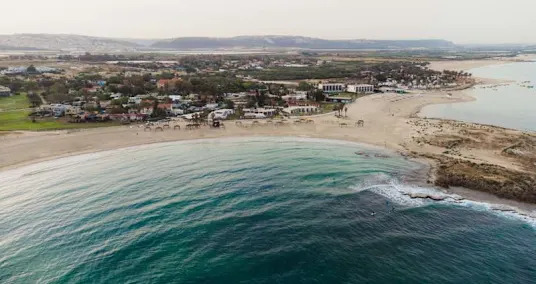
The discovery was made in an ancient shipwreck in the Dor Lagoon near the Carmel Coast, where archaeologists recovered nine pieces of unprocessed iron known as “blooms.”
Researchers from the University of Haifa said Wednesday that an underwater excavation off Israel’s northern Mediterranean coast uncovered what they described as the earliest known cargo of raw iron transported by ship, dating back around 2,600 years, Xinhua reported.
The discovery was made in an ancient shipwreck in the Dor Lagoon near the Carmel Coast, where archaeologists recovered nine pieces of unprocessed iron known as “blooms.” According to the university, the find provides direct evidence of how iron was transported in its earliest commercial stages.
The material was preserved in its original form, having solidified directly in a smelting furnace without undergoing forging or further refinement. Researchers said this distinguishes the cargo from later iron artifacts that typically show signs of shaping or tool-making.
Unlike copper and bronze, which could be melted into liquid form in ancient production processes, iron was heated with charcoal to produce a solid, porous mass. That mass was generally hammered to remove impurities and create denser material suitable for tools and implements.
The recovered blooms showed no indication of that secondary processing stage, suggesting they were transported immediately after production.

Earliest iron shipment discovered in ancient Mediterranean wreck
To determine the age and condition of the cargo, researchers conducted microscopic and chemical analyses.
Radiocarbon dating was also carried out on charred wood embedded in one of the pieces, helping confirm the timeline of the shipment. The findings were published in the journal Heritage Science.
Researchers said the cargo indicates that iron was being moved in raw form from production sites to other locations for further processing, pointing to a level of specialization in ancient manufacturing and trade networks in the Mediterranean.
The University of Haifa said the discovery provides new insight into early iron production and distribution practices in the region.
LATEST POSTS
- 1
 Ageless Tastefulness: An Outline of Valuable Gemstones and Adornments
 - 2Mating injuries may lead scientists to identify dinosaurs’ sex
- 3JFK's granddaughter Tatiana Schlossberg reveals terminal cancer diagnosis
- 4Ukrainian Army Converts E38 BMW 7-Series Into Multiple Rocket Launch Platform
- 5Exposure to neighborhood violence leads some Denver teens to use tobacco and alcohol earlier, new study shows


- 5 Great Youngster Care Administrations To Watch in 2024
- Why this Tennessee special election has the 'whole world' watching
- The cave was pitch black – so to create this magical underwater shot, the photographer had to use all his camera expertise...
- How we came to be: Scientists get first look at the evolution of early complex animals
- Verdicts against social media companies carry consequences. But questions linger
- The Most Important Crossroads in Olympic History
- The Best 20 Tunes that Characterized an Age
- Geminid shooting stars: One of 2025's most exciting meteor showers begins tonight
- Step by step instructions to Streamline Your Dozing Involvement in a Savvy Bed